Project Scentinel
Autonomous Context-Aware Air Quality Remediation Node
Retrofit of a commercial aerosol enclosure into an autonomous IoT air quality node driving a DC motor when VOC or humidity thresholds breach.
DOMAIN
EMBEDDED
DATE RECORD
2024-06-15
DEPLOYMENT STATUS
■ COMPLETED
CORE TECHNOLOGIES
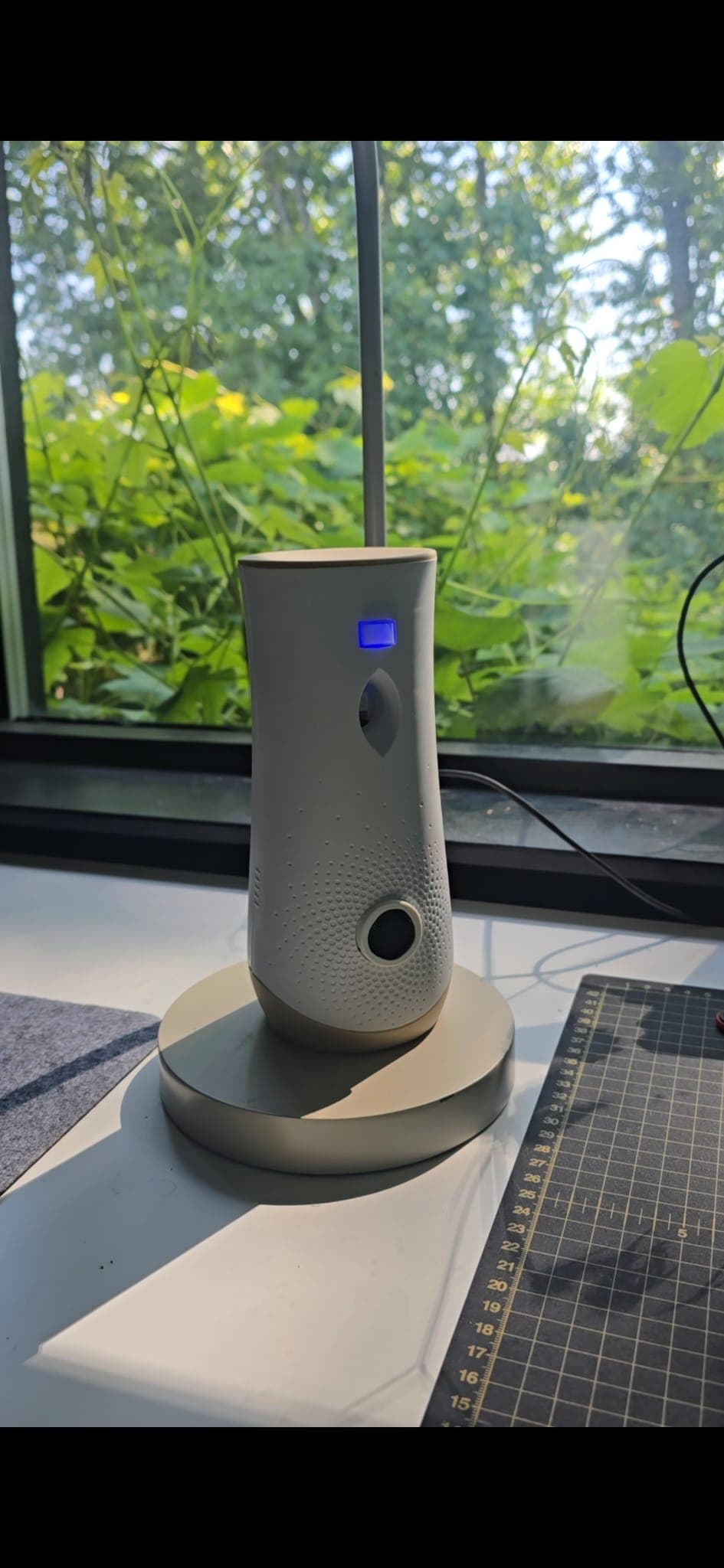
Standard commercial automated air fresheners operate on blind timers regardless of room occupancy or atmospheric conditions. The objective of Project Scentinel was to retrofit an existing commercial chassis into an autonomous cyber-physical IoT node that continuously monitors VOCs, humidity, and temperature, actuating physical aerosol release only when air quality thresholds are breached.
Recognized by faculty and industry supervisors at Linnaeus University (Applied IoT, course 1DT305) and awarded 2nd Place out of 62 engineering project submissions.
- ■Hardware Node: MicroPython runtime on a Raspberry Pi Pico W reading environmental telemetry from an I2C-connected BME680 sensor module.
- ■Motor Control: Actuates the mechanical cam mechanism via a DRV8833 dual H-bridge motor driver, paired with an RGB status LED and piezo audio amplifier.
- ■Telemetry Pipeline: Sensor telemetry is published over local Wi-Fi using MQTT to an on-premise Mosquitto broker.
- ■Control Surface: Aggregated and monitored via a custom Home Assistant OS instance running on an x86 server node.
- ■Hardware PWM Conflicts: Resolved timer and interrupt collisions between the audio tone generator and the multi-channel RGB LED driver sharing hardware PWM slices on the RP2040.
- ■Bootloader Adaptations: Overcame 32-bit UEFI firmware restrictions on legacy x86 hardware stick to deploy a 64-bit Debian-based Home Assistant OS host.
Future iterations focus on active remediation rather than olfactory masking. The architecture is designed to interface with window actuators and HVAC intake dampers, alongside adding laser-based PM2.5 particulate scattering sensors and migrating to USB-C Power Delivery.
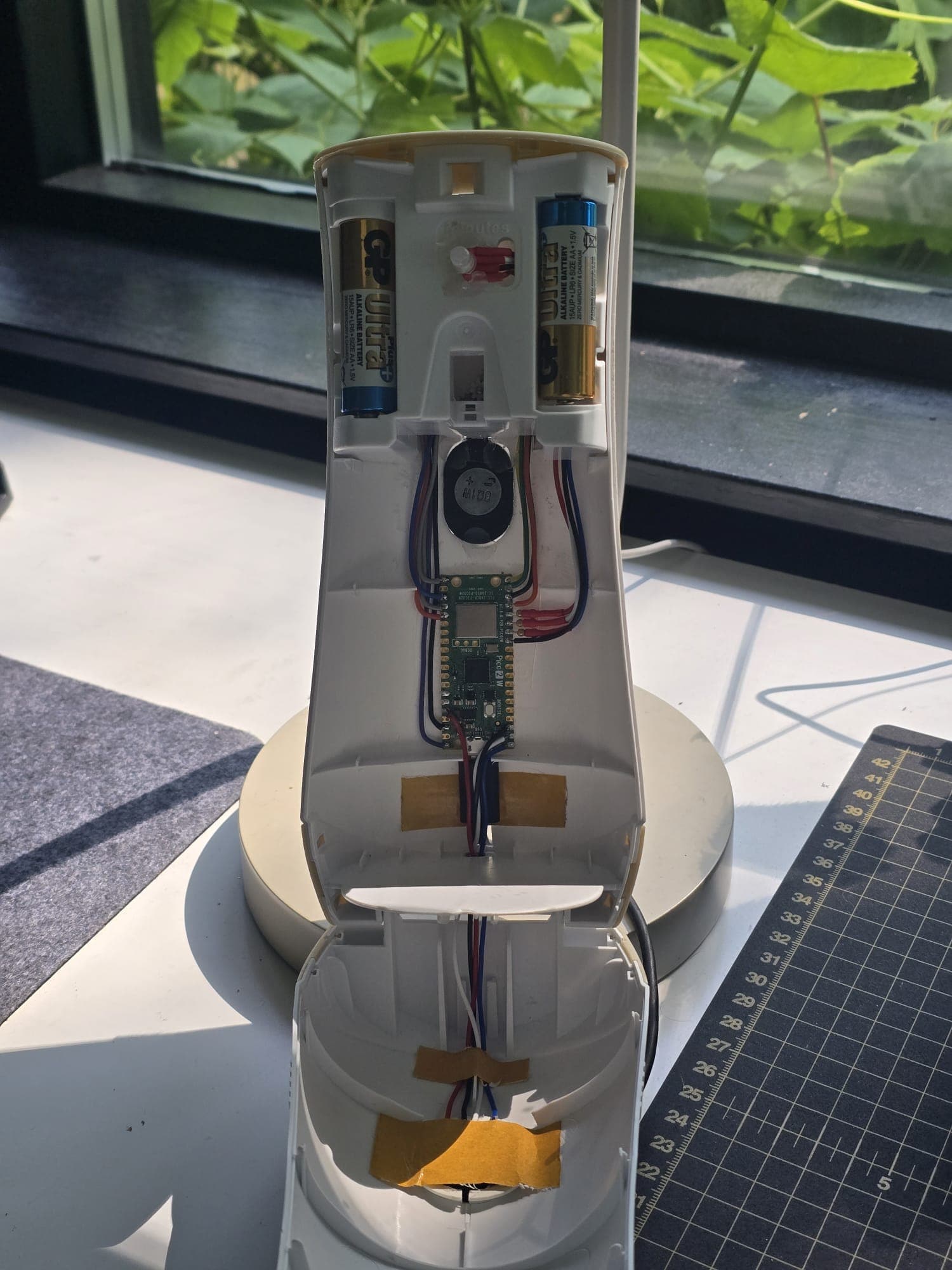
Mechanical and electronics packaging within the commercial shell: RP2040 Pico W, wire routing, and power distribution.
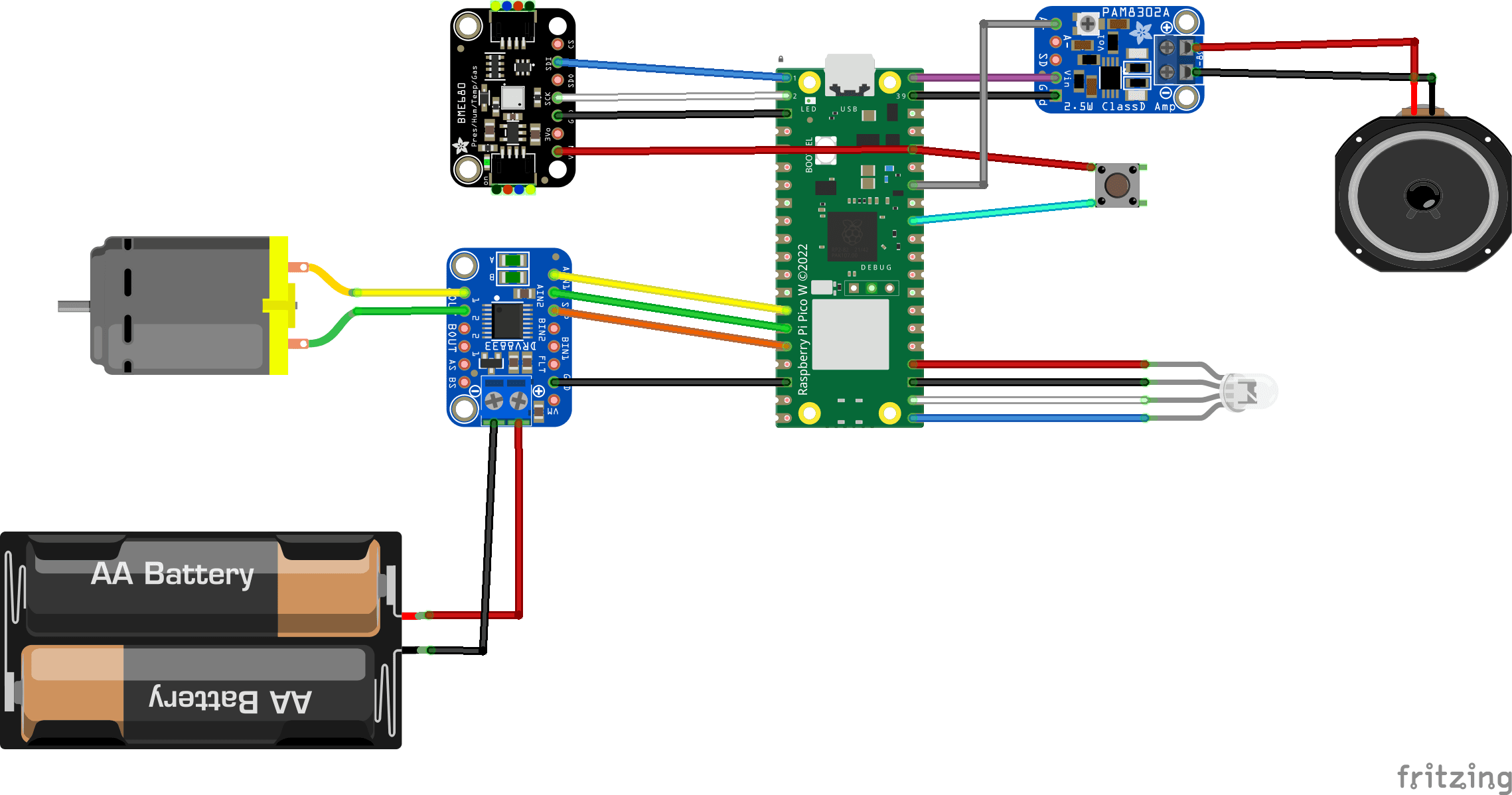
Fritzing schematic diagram documenting GPIO allocations, power rail isolation, and motor driver pinouts.
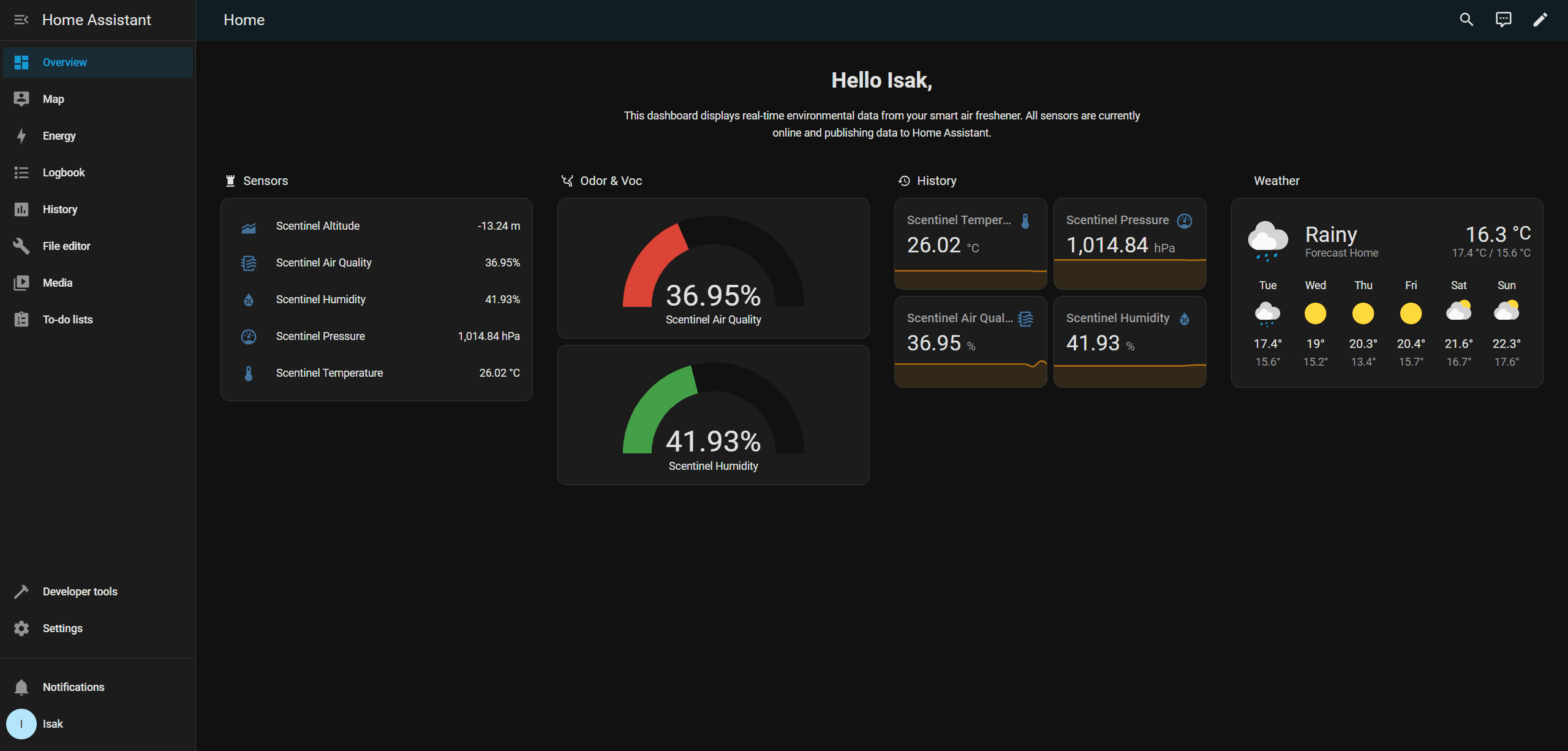
Aggregated environmental telemetry interface on Home Assistant OS showing live VOC, humidity, and pressure logs.